
- Store:Náměstí míru 142, Domažlice
- E-mail:info@saman-shop.cz
- Phone:+420 603 886 844


Details
-
Name:
Spirulina -
Genus:
Spirulina -
Country of Origin:
Japan, China -
Use:
Crushed blue-green algae -
Dosage:
3x 1 teaspoon/day -
Other names:
Spirulina -
Caution:
Pregnant and lactating women after consulting a doctor. -
Category:
Herbs - Find in the e-shop
Spirulina
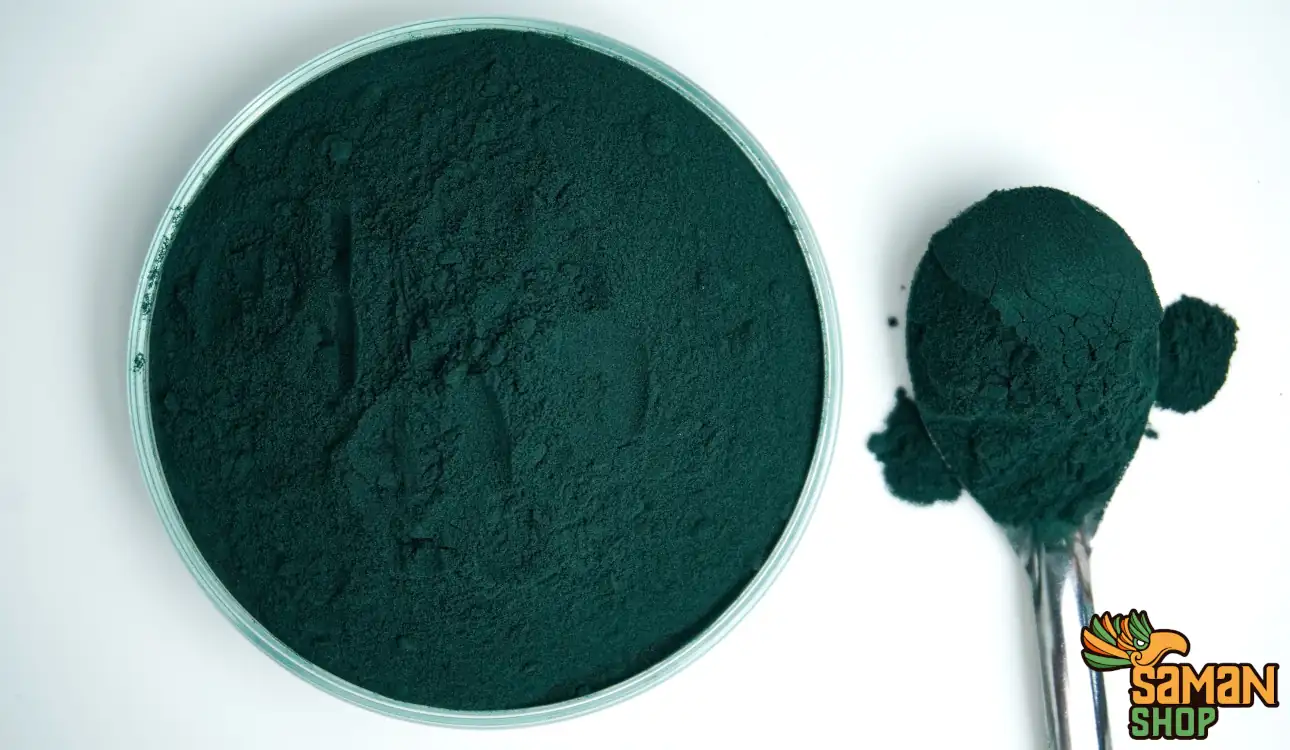
What does the name - green foods tell us? Many of us would probably think of organic food and similar products. That's not the case. Green foods include, for example, Spirulina. It is not an algae, as many people think, but a cyanobacteria. Its helix is twisted to the left, which is why it is classified as a Oscillatoriales. If we wanted to look for it under its Latin name, we would look for Arthrospira. There are of course more species - the two best known are Arthrospira platensis and Arthrospira maxima. They differ mainly in their areas of occurrence. While maxima is found more in Central America, platensis has fallen in love with Africa, Asia and South America. We can tell what the cyanobacteria is good for by the areas of occurrence. It is of course tropical to subtropical zone, freshwater with high pH and temperatures around 25-40 degrees Celsius. In addition to its occurrence and its teachings, the history of Spirulina is also interesting. Let's talk about it.
It should be added that Spirulina has been around for millions, if not billions of years. It supplies oxygen and helps clean our already polluted environment. The first mentions of this cyanobacteria were made by Cortez and his Conquistadors. Around 1519, they noticed that the Aztecs served something blue-green with their food. Hundreds of years later, researcher Pierr Dangeard also studied the same thing, noting that flamingos can survive only by consuming this cyanobacteria. His discoveries were subsequently supported by the botanist Jean Leonard. This started the tradition of Spirulina, which has survived to this day. Unfortunately, the demand is so high that the natural occurrence is not able to cover it. That is why Spirulina began to be cultivated. The largest current grower is Japan. We are talking about the demand caused by the effects of Spirulina, but what are they actually? WHAT DOES SPIRULINA CONTAIN? To better understand the effects of this cyanobacteria, we should first list the substances it contains. The essential ones include, for example, vitamins C, A, D, E, B1, B2, B3, B6 and B9. The protein content is also very important, which is about 80% of Spirulina. Thanks to such a high content, it is especially popular with athletes. As we well know, proteins are composed of amino acids. The most important for us are the essential amino acids, i.e. those that our body cannot produce on its own. It contains 8 out of the total ten essential amino acids, plus other non-essential ones. We would also come across trace elements and minerals, cell salts, plant nutrients and enzymes, chlorophyll and other beneficial pigments. And what do these substances cause?
SPIRULINA AND ITS EFFECTS
If we were looking for the right word for the effects of Spirulina, it would probably be - complex. Thanks to the content of vitamins, minerals and all other substances, this blue-green cyanobacteria affects our entire body. It thus supports vitality and zest for life. The presence of vitamin C helps our immunity. The contained antioxidants support the body in the fight against free radicals and the proteins have an effect on our muscles. Now that we have mentioned the positive effects, it is time to talk about the negative ones.
DOSAGE AND SIDE EFFECTS OF SPIRULINA
It has been proven that side effects directly associated with the use of Spirulina have not been identified. Stick to the daily dose and you don't have to worry about anything. The ideal daily dose is 1 teaspoon 3 times a day. This amount is 2-3 of our 1g scoops. The daily dose can be taken in several ways. The best option is to mix it in water, where 150-200 milliliters is enough. We can also add it to a smoothie or other dish.
CAN SPIRULINA BE COMBINED?
Right at the beginning, let's say the following - Green foods are generally combinable. This includes Spirulina, Chlorella, but also Young barley. This green trio has great effects - in combination with chlorella, there is better detoxification, with Young barley there is increase and improvement of the general effects of both products.
SUITABLE FOR
- People with low immunity
- Fitness enthusiasts
- People with low vitality
- Animals
OTHER PRODUCT NAMES
You may also know the herb under foreign or incorrect names. Spirulina platensis, Arthrospira plantensis, Blue-green algae, Spirulina platensis, Spirulina Fusiformis
COUNTRY OF ORIGIN
China
This is an automatic machine translation.